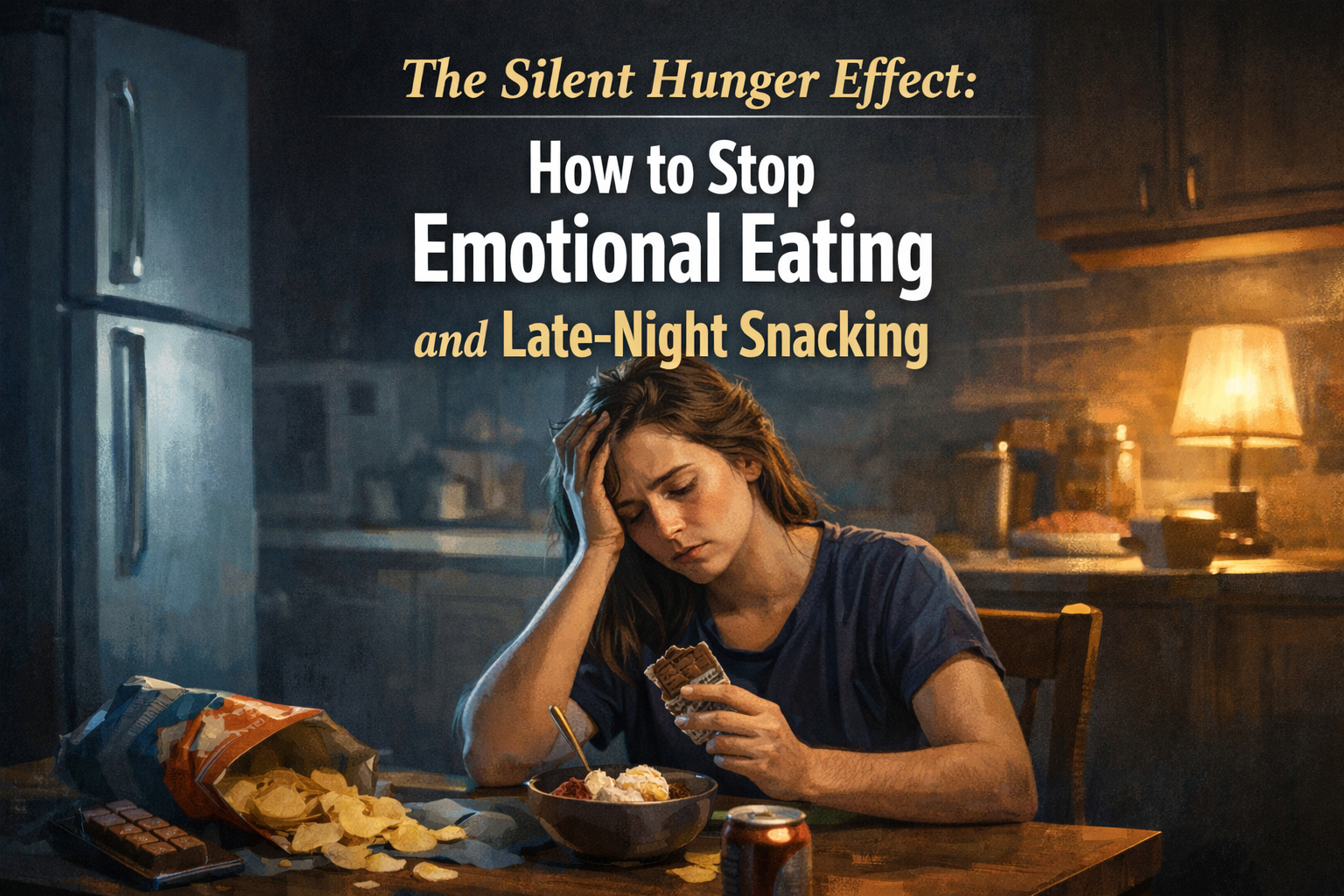
Most hunger isn’t loud.
It doesn’t growl.
It whispers.
Late-night snacking. Stress cravings. Mindless eating after a long day. This is what many nutrition scientists call “silent hunger”—a form of eating driven not by true energy needs, but by emotions, stress, and disrupted biology.
This article will tell you how to Stop Emotional Eating.
Understanding why this happens is the first step to stopping it—without guilt, extreme dieting, or willpower battles.
What Is “Silent Hunger”?
Silent hunger occurs when the body signals the need for comfort, rest, or regulation, not calories—but the brain interprets it as food.
Common triggers include:
- Chronic stress and cortisol spikes
- Poor sleep or irregular circadian rhythm
- Blood sugar crashes
- Emotional fatigue or mental overload
In high-stress modern lifestyles, especially after long work or study days, the brain looks for the fastest reward available—usually sugar, salt, or ultra-processed foods.
The Brain Chemistry Behind Emotional Eating
Emotional eating isn’t a discipline problem—it’s a neurochemical response.
Here’s what’s happening:
- Stress raises cortisol, which increases appetite
- Low dopamine drives reward-seeking behaviors
- Reduced serotonin increases cravings, especially at night
- Blood sugar instability amplifies hunger signals
Late at night, when willpower is low and fatigue is high, the brain seeks quick relief—not long-term health.
Why Late-Night Snacking Feels So Hard to Control
Nighttime eating has less to do with hunger and more to do with biology.
At night:
- Melatonin rises (sleep signal)
- Insulin sensitivity drops
- Emotional processing increases
- Decision fatigue peaks
Food becomes a tool for:
- Relaxation
- Distraction
- Comfort
- Stress relief
Understanding this removes shame—and allows smarter solutions.
Silent Hunger vs. Real Hunger: Learning to Tell the Difference
One of the most effective ways to learn how to stop emotional eating is to understand the difference between physical hunger and silent hunger.
Physical hunger:
- Builds gradually
- Is felt in the stomach
- Improves with balanced meals
- Isn’t picky about food
Silent (emotional) hunger:
- Feels sudden and urgent
- Craves specific comfort foods
- Appears during stress or fatigue
- Often hits late at night
When silent hunger appears, the body isn’t asking for calories—it’s asking for regulation. Regulation can mean rest, emotional release, safety, or stress relief. Food works temporarily because it activates dopamine, but the relief fades quickly, restarting the cycle.
This is why willpower alone rarely works. The brain is trying to solve a problem—just not the right one.
A powerful strategy is to meet emotional hunger with a non-food response first, then decide if food is still needed. This might include:
- A warm shower
- Herbal tea
- Deep breathing
- Listening to calming music
- Light stretching
If you still feel hungry afterward, eating becomes intentional instead of automatic.
Over time, this practice rewires the brain’s stress-response pathways. You begin responding instead of reacting. Cravings lose urgency. Eating becomes calmer, more conscious, and more satisfying.
Learning how to stop emotional eating isn’t about control—it’s about awareness, compassion, and biological support. When the nervous system feels safe, silent hunger no longer needs to shout.
How to Stop Emotional Eating (Without Restriction)
1. Eat Enough During the Day
Under-eating earlier leads to over-snacking later.
Focus on:
- Protein at every meal
- Healthy fats for satiety
- Fiber-rich whole foods
A nourished body is less likely to panic at night.
2. Regulate Stress Before Regulating Food
Food cravings often disappear once stress is addressed.
Try:
- 5 minutes of slow breathing
- A short walk
- Stretching or light movement
- Journaling one stressful thought
Lower cortisol = fewer cravings.
3. Build a “Pause Ritual” Before Snacking
Instead of banning snacks, pause first.
Ask:
- Am I tired?
- Am I stressed?
- Am I bored?
- Am I actually hungry?
If hunger is real—eat mindfully.
If not—meet the real need.
4. Improve Sleep Quality
Poor sleep increases hunger hormones the next day.
Support sleep by:
- Eating balanced dinners
- Avoiding caffeine late in the day
- Keeping a consistent bedtime
- Dimming lights at night
Better sleep = fewer cravings.
5. Replace Judgment With Curiosity
Shame strengthens emotional eating cycles.
Instead of:
“Why do I keep failing?”
Try:
“What is my body asking for right now?”
This shift alone reduces binge patterns.
The Goal Isn’t Control—It’s Regulation
Stopping emotional eating doesn’t mean never snacking again.
It means understanding the signals beneath the cravings.
When stress is managed, sleep is protected, and nutrition is balanced, silent hunger becomes quieter—sometimes disappearing entirely.
Final Thought
Your body isn’t sabotaging you—it’s communicating. Cravings are not a lack of willpower or discipline; they’re signals asking for attention. When you learn to listen instead of fight, you can Stop Emotional Eating at its source rather than trying to control it with force.
Emotional eating often shows up when the body is under-fueled, overstimulated, stressed, or seeking regulation. Food becomes a fast way to soothe the nervous system, stabilize blood sugar, or create a sense of comfort. Trying to Stop Emotional Eating through restriction or shame only amplifies the cycle, because the underlying need is never addressed.
The shift happens when you learn the language behind the craving. Is it hunger? Fatigue? Overwhelm? A need for rest, nourishment, or emotional safety? When those needs are met directly, the urge loses intensity. This is how you Stop Emotional Eating without white-knuckling or guilt.
Building consistent meals, stabilizing blood sugar, prioritizing sleep, and managing stress all send signals of safety to the body. Over time, this creates trust—and trust is what allows you to Stop Emotional Eating sustainably.
You don’t need more rules. You need awareness, compassion, and alignment. Learn the language your body is using, and the cravings lose their power. That’s how you truly Stop Emotional Eating—by working with your body, not against it.
FAQ – Short & Clear Answers
What causes emotional eating?
Emotional eating is often triggered by stress, fatigue, poor sleep, and blood sugar instability. When cortisol and dopamine are imbalanced, the brain seeks quick comfort—usually through food.
How can I tell if I’m emotionally eating or physically hungry?
Physical hunger builds slowly and is satisfied by most foods. Emotional hunger feels sudden, craves specific comfort foods, and often appears during stress or late at night.
What is the best way to stop late-night snacking?
The most effective approach is eating balanced meals during the day, managing stress in the evening, and improving sleep quality. Late-night cravings often reflect unmet needs, not true hunger.
Can emotional eating go away completely?
For many people, emotional eating significantly decreases when stress, sleep, and nutrition are regulated. The goal isn’t perfection—it’s reducing frequency and intensity.
Is emotional eating a sign of weak willpower?
No. Emotional eating is a biological response to stress and nervous system overload. Learning how to stop emotional eating requires regulation, not restriction or self-judgment.





Leave a Reply