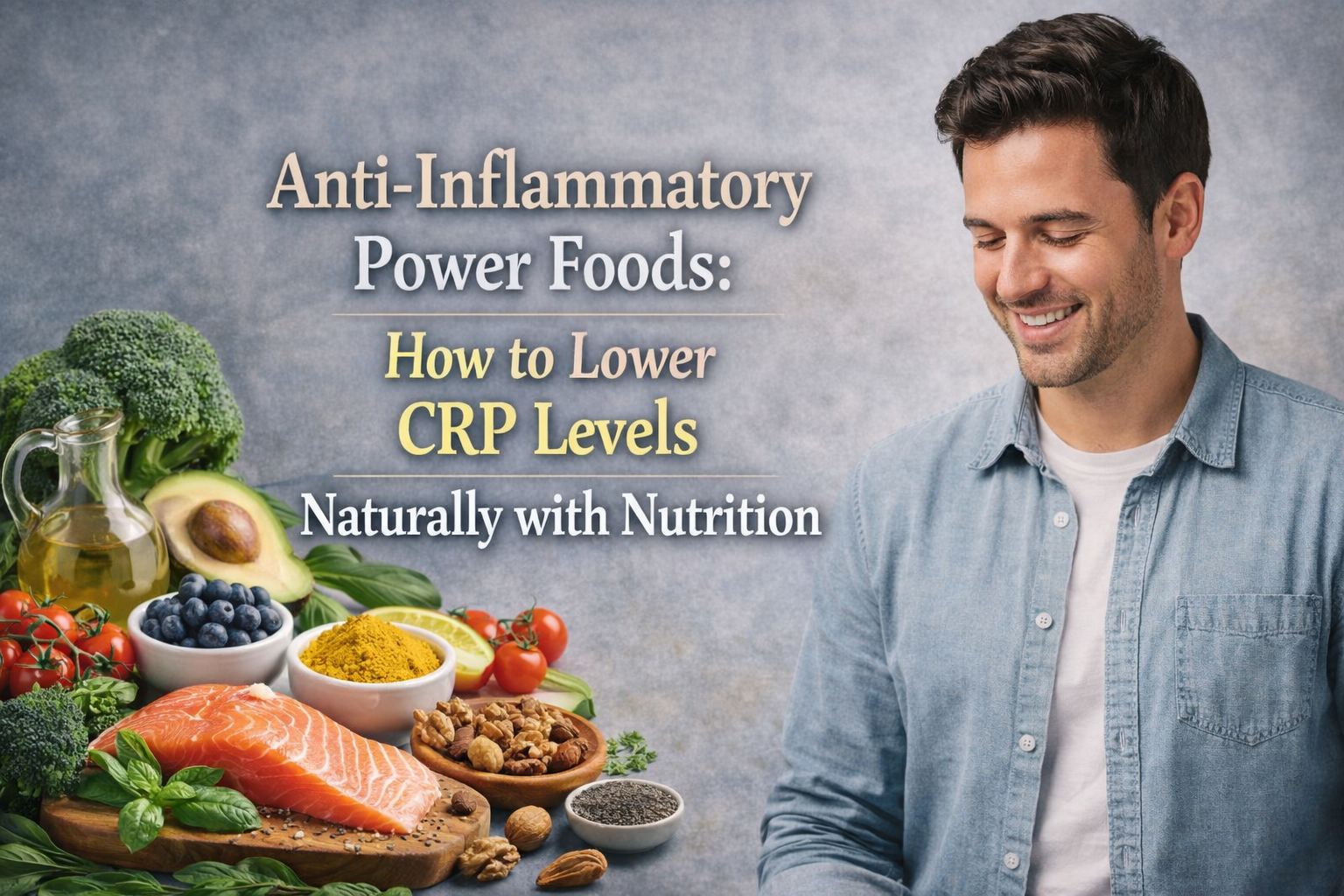
Intro – the short answer first
Chronic inflammation is one of the most overlooked drivers of fatigue, weight gain, metabolic issues, and long-term health risk. CRP (C-reactive protein) is a common blood marker used to measure inflammation in the body. While medication may be necessary in some cases, nutrition is one of the most powerful tools to lower CRP levels naturally.
This article explains which anti-inflammatory power foods actually work, why they work, and how to use them consistently—without extremes or unrealistic rules.
What is CRP and why does it matter?
CRP (C-reactive protein) is produced by the liver in response to inflammation. Higher levels often indicate:
- Chronic low-grade inflammation
- Increased cardiovascular risk
- Metabolic stress
- Immune system overactivation
CRP doesn’t tell you where inflammation comes from—but it tells you it’s there.
Diet plays a major role in either calming or fueling this inflammatory signal.
How food influences inflammation
Inflammation is not always bad. It’s part of healing. The problem is chronic inflammation, which is often driven by:
- Ultra-processed foods
- Excess sugar
- Refined vegetable oils
- Frequent blood sugar spikes
Anti-inflammatory power foods work by:
- Reducing oxidative stress
- Stabilizing blood sugar
- Supporting gut health
- Providing micronutrients needed for immune regulation
The most effective anti-inflammatory power foods
1. Fatty fish (omega-3 powerhouse)
Salmon, sardines, mackerel, and anchovies are rich in omega-3 fatty acids.
Why they help:
- Reduce inflammatory signaling
- Support vascular health
- Improve CRP markers over time
Aim for 2–3 servings per week.
2. Extra virgin olive oil
A cornerstone of anti-inflammatory diets.
Benefits:
- Contains polyphenols that reduce inflammation
- Replaces pro-inflammatory refined oils
Use it as your primary fat for cooking and dressing.
3. Colorful vegetables
Leafy greens, broccoli, peppers, and cruciferous vegetable are example of anti-inflammatory power foods.
Why they matter:
- High in antioxidants
- Support detoxification pathways
- Feed beneficial gut bacteria
There are a lot of anti-inflammatory power foods.
More color = broader anti-inflammatory protection.
4. Berries
Blueberries, raspberries, strawberries, and blackberries are another anti-inflammatory power foods that are rich in polyphenols.
Effects:
- Reduce oxidative stress
- Support immune balance
- Help regulate blood sugar
Small portions regularly are more effective than occasional large servings.
5. Nuts and seeds
Walnuts, almonds, flaxseeds, and chia seeds are anti-inflammatory power foods that provide:
- Healthy fats
- Fiber
- Anti-inflammatory micronutrients
They support inflammation reduction when eaten in moderate amounts.
6. Legumes and whole grains
Lentils, beans, oats, and barley are anti-inflammatory power foods that provide slow-digesting carbohydrates.
Benefits:
- Improve gut microbiome diversity
- Reduce inflammatory markers
- Stabilize glucose levels
These foods work best when replacing refined carbs—not added on top.
Foods that quietly raise CRP
Lowering inflammation isn’t only about what you add—it’s also about what you reduce.
Frequent contributors to elevated CRP:
- Sugary drinks
- Ultra-processed snacks
- Refined seed oils
- Excess alcohol
Reducing frequency matters more than perfection.
Everyday examples
- Switching breakfast pastries for oats with berries
- Using olive oil instead of refined cooking oils
- Adding fish twice a week instead of processed meats
- Building meals around vegetables, not side dishes
Small changes repeated consistently lower inflammatory load.
Common mistakes
- Expecting instant CRP reduction
- Taking supplements without fixing diet
- Cutting foods aggressively instead of improving quality
- Ignoring sleep and stress (both raise CRP)
Inflammation responds to patterns, not short-term fixes.
The science (simplified)
Inflammation is your body’s natural response to stress, injury, or infection. While short-term inflammation is protective, chronic low-grade inflammation can lead to fatigue, digestive issues, and long-term health problems.
Certain nutrients help keep inflammation in check. Omega-3s from fish, flax, and chia reduce pro-inflammatory signaling. Polyphenols in colorful fruits, vegetables, tea, and cocoa act as antioxidants, calming immune responses. Fiber from whole plant foods nourishes the gut microbiome, producing compounds that support a balanced immune system.
Stable blood sugar and a healthy gut further reduce triggers for inflammation. Spikes and crashes in glucose can activate stress responses, while a balanced diet of protein, healthy fats, and fiber keeps levels steady. A diverse gut microbiome strengthens the intestinal barrier, preventing unwanted immune activation.
Food doesn’t simply “turn off” inflammation—it helps rebalance it. Over time, nutrient-rich, anti-inflammatory foods, combined with gut and metabolic support, can lower markers like C-reactive protein (CRP) and improve overall resilience.
By focusing on whole, nutrient-dense foods and supporting your gut, you give your body the tools it needs to manage inflammation effectively—helping you feel energized, balanced, and healthy every day.
Conclusion – practical takeaway
Anti-inflammatory power foods don’t work as a detox or a quick cure. They work by lowering the daily inflammatory burden your body carries. When combined with stable meals, adequate sleep, and stress management, nutrition can meaningfully influence CRP levels over time.
Consistency beats intensity—every time.
5 FAQ – Short & Clear Answers
1. Can food really lower CRP levels?
Yes. Long-term dietary patterns strongly influence CRP markers.
2. How long does it take to see changes in CRP?
Improvements are often seen within 4–8 weeks of consistent changes.
3. Do supplements work better than food?
Whole foods are more effective due to combined nutrient effects.
4. Is an anti-inflammatory diet restrictive?
No. It focuses on food quality, not elimination.
5. Who should care about CRP levels?
Anyone with chronic stress, metabolic issues, or cardiovascular risk.





Leave a Reply