Intro – the short answer first
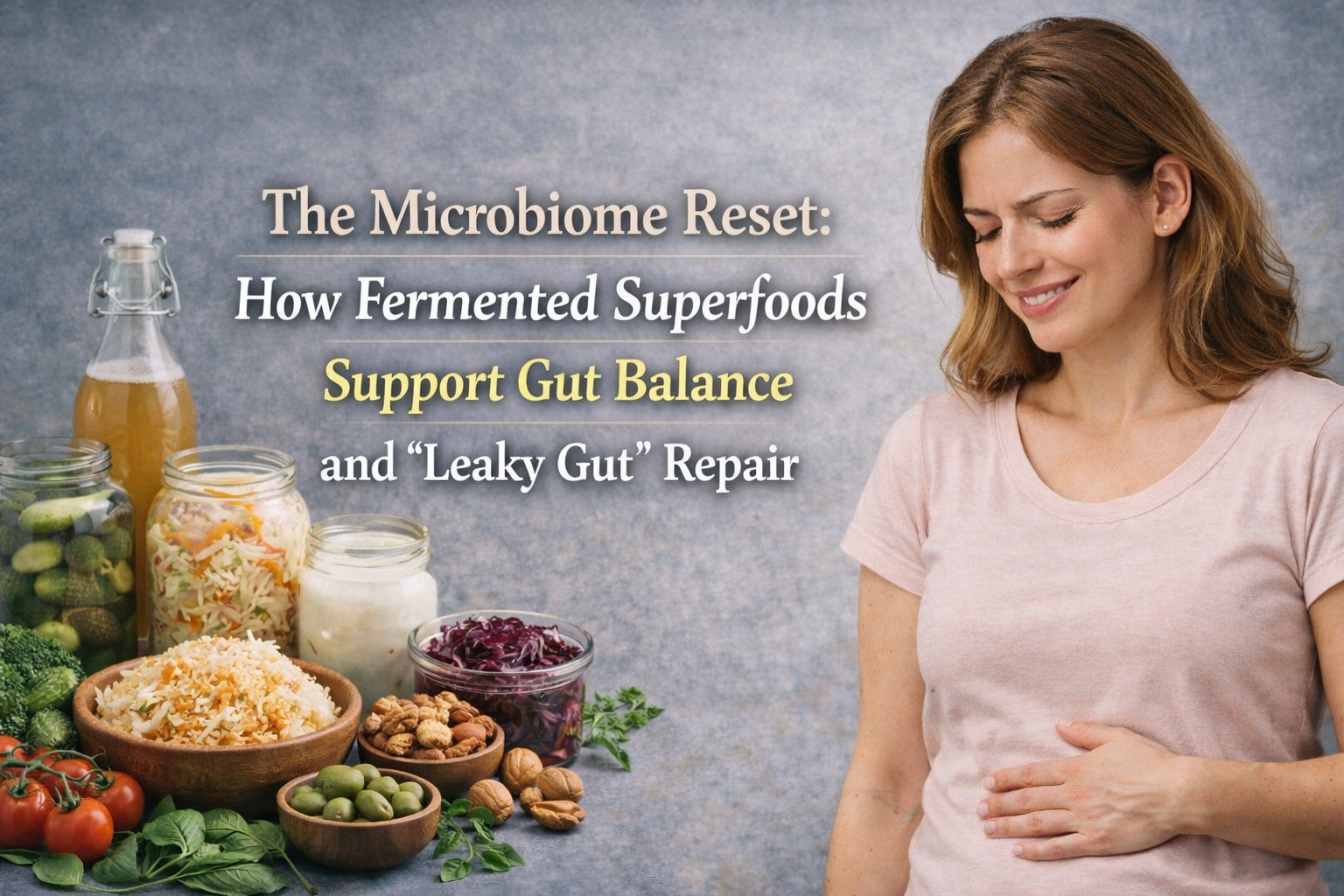
If you struggle with bloating, food sensitivities, low energy, or unexplained inflammation, your gut barrier and microbiome may be under stress. A so-called “leaky gut” isn’t about holes—it’s about impaired gut lining function and microbial imbalance. Fermented superfoods can play a key role in a microbiome reset, helping restore gut balance, support digestion, and calm inflammatory signals over time.
This article explains how fermented foods work, why they matter, and how to use them safely and effectively.
What does “leaky gut” actually mean?
“Leaky gut” is a non-medical term often used to describe increased intestinal permeability. When the gut lining is stressed, it may allow substances to pass through more easily, triggering immune responses.
Common contributors include:
- Chronic stress
- Ultra-processed diets
- Alcohol excess
- Poor sleep
- Long-term inflammation
The gut lining and the microbiome are deeply connected—when one suffers, the other follows.
Why the microbiome is central to gut healing
Your microbiome is made up of trillions of bacteria that:
- Help digest food
- Produce beneficial compounds
- Train the immune system
- Protect the gut lining
A disrupted microbiome can:
- Increase inflammation
- Reduce nutrient absorption
- Weaken gut barrier integrity
A microbiome reset focuses on rebuilding diversity and balance, not wiping bacteria out.
How fermented superfoods support a microbiome reset
1. They introduce beneficial bacteria
Fermented foods contain live microorganisms that can temporarily increase microbial diversity. It contributes significantly in a microbiome reset.
Examples:
- Yogurt with live cultures
- Kefir
- Sauerkraut
- Kimchi
- Fermented vegetables
These microbes interact with your existing gut bacteria and support healthier signaling.
A microbiome reset is a dietary and lifestyle plan designed to rebalance your gut bacteria.

2. They improve gut barrier signaling
Fermented foods play significant role in microbiome reset. Fermented foods produce compounds like short-chain fatty acids during digestion, which:
- Support gut lining cells
- Help regulate inflammation
- Improve immune tolerance
This creates a more stable gut environment.
3. They enhance digestion and nutrient absorption
Fermentation pre-digests certain components of food, making nutrients easier to absorb and reducing digestive strain.
This is especially helpful for people with sensitive digestion.
4. They support immune regulation
A balanced microbiome helps the immune system distinguish between threats and harmless substances—reducing overreaction. Thus, microbiome reset is essential.
Less immune overreaction = less gut irritation.
5. They work best as part of a system
Fermented foods are not a standalone cure. They work best alongside:
- Fiber-rich whole foods
- Adequate protein
- Reduced ultra-processed intake
- Stress and sleep support
Best fermented superfoods for beginners
Start small and build gradually.
Good options:
- Plain yogurt or kefir
- Sauerkraut (unpasteurized)
- Fermented carrots or beets
- Miso
- Tempeh
Small daily amounts are more effective than large occasional servings.
Common mistakes when using fermented foods
- Starting with too much too fast
- Using them while eating a highly processed diet
- Expecting instant results
- Ignoring bloating or discomfort signals
- Replacing meals with ferments
Fermented foods support the gut—they don’t override poor habits.
Everyday examples
- Adding a spoon of sauerkraut to lunch
- Choosing yogurt with live cultures for breakfast
- Using miso in soups
- Pairing fermented foods with fiber-rich meals
Consistency matters more than variety at first.
The science (simplified)
Fermented foods do more than add flavor—they are living sources of beneficial microbes and bioactive compounds that can have a profound impact on gut health. When consumed regularly, these foods help shape the composition and diversity of the gut microbiome, influencing not just digestion, but immune function, metabolic signaling, and the health of the gut lining.
The microbes in fermented foods produce metabolites, such as short-chain fatty acids, that nourish the cells of the intestinal lining. This supports the maintenance of the gut barrier, which is essential for keeping harmful substances out of the bloodstream while allowing nutrients to pass through efficiently. A strong, well-regulated gut barrier is key to reducing inflammation, supporting immunity, and promoting overall health.
Fermentation also generates bioactive compounds that interact with the immune system and microbial populations in the gut. These compounds can help regulate immune responses, improve the balance of “friendly” versus “potentially harmful” bacteria, and even influence the production of neurotransmitters like serotonin, which impacts mood and stress.
In essence, fermented foods act as a form of nutritional support that goes beyond basic vitamins and minerals. They provide living compounds that actively communicate with your gut microbiome, supporting the body’s natural processes of repair, balance, and resilience. Regularly including these foods in your diet helps build a healthier gut environment, setting the foundation for better overall health, immunity, and even mental well-being.
Conclusion – practical takeaway
A microbiome reset isn’t about extremes, cleanses, or eliminating everything. It’s about supporting the gut environment so healing can occur naturally. Fermented superfoods, when used consistently and thoughtfully, can be a powerful tool in improving gut balance and supporting gut barrier function.
Start small. Stay consistent. Let the system adapt.
5 FAQ – Short & Clear Answers
Can fermented foods heal leaky gut completely?
They support gut balance, but healing depends on overall lifestyle and diet patterns.
How long does a microbiome reset take?
Some improvements appear within weeks; deeper changes take months.
Are probiotic supplements better than fermented foods?
Whole foods often work better due to fiber and bioactive compounds.
Can fermented foods cause bloating?
Yes, especially if introduced too quickly. Start small.
Who benefits most from fermented superfoods?
People with digestive discomfort, inflammation, or low diet diversity.





Leave a Reply