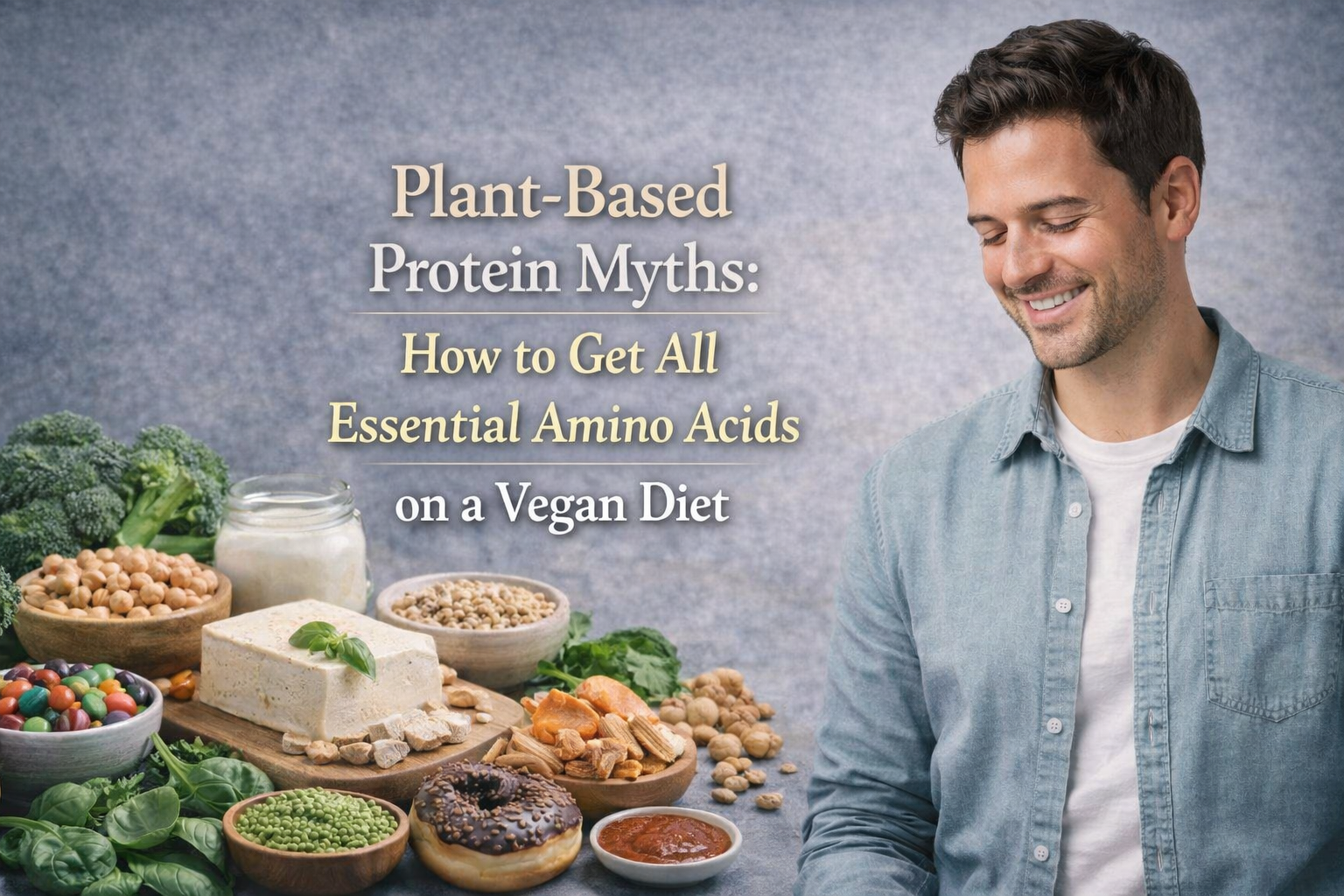
Intro – the short answer first
You can get all essential amino acids on a vegan diet—without complicated food combining at every meal. The real issue isn’t plant protein quality, but misunderstanding how protein variety and total intake work. Many plant-based protein myths come from outdated nutrition ideas, not modern evidence.
There are many Plant-Based Protein Myths that cause confusion for people transitioning to a more plant-forward lifestyle. From fears about muscle loss to concerns about nutrient deficiencies, these myths often prevent people from fully embracing plant-based protein sources.
This article explains what essential amino acids are, where plant proteins fall short (and where they don’t), and how to meet your needs simply and reliably.
What are essential amino acids (and why they matter)?
Proteins are made of amino acids. Your body can make some—but nine are essential, meaning you must get them from food.
Essential amino acids support:
- Muscle repair and maintenance
- Enzyme and hormone production
- Immune function
- Neurotransmitter balance
If intake is consistently low, performance and recovery suffer—regardless of diet style.
Where the confusion about plant protein comes from
One of the biggest plant-based protein myths is that plant proteins are “incomplete” and therefore inferior.
Here’s the truth:
- Most plant foods contain all amino acids
- Some are lower in one or two essential amino acids
- This doesn’t make them useless—it means variety matters
Your body also maintains an amino acid pool throughout the day, not meal by meal.
Myth #1: You must combine proteins at every meal
One of the most common Plant-Based Protein Myths is that you can’t get enough protein without meat.
This idea came from older nutrition theories.
Reality:
You do not need to perfectly combine proteins at every meal. Eating a variety of plant proteins across the day is sufficient.
Your body pools amino acids and uses them as needed.
Myth #2: Plant protein can’t support muscle or performance
Another Plant-Based Protein Myth is that plant proteins are incomplete or inferior.
Many athletes thrive on plant-based diets.
What matters most:
- Total protein intake
- Protein distribution across meals
- Digestibility and quality
With enough calories and protein, plant-based diets can fully support strength and endurance.
Myth #3: Only animal protein is “complete”
These Plant-Based Protein Myths often come from outdated nutrition science.
Animal proteins are naturally balanced—but some plant foods are too.
Examples of complete plant proteins:
- Soy (tofu, tempeh, edamame)
- Quinoa
- Buckwheat
- Amaranth
Even foods that aren’t “complete” still contribute meaningfully.
The most important essential amino acids for vegans
Some amino acids deserve extra attention:
- Leucine – key for muscle protein synthesis
- Lysine – often lower in grains
- Methionine – often lower in legumes
This is where strategic variety comes in.
How to get all essential amino acids on a vegan diet
1. Build meals around protein—not just carbs
Many vegan diets fail due to carb-heavy meals with little protein.
Good protein anchors:
- Tofu or tempeh
- Lentils or chickpeas
- Beans
- Soy yogurt
- Plant protein blends
2. Use complementary protein groups
You don’t need perfection—just balance.
Classic combinations:
- Legumes + grains (beans + rice)
- Legumes + seeds (lentils + tahini)
- Soy + vegetables
These combinations naturally cover amino acid gaps.
3. Eat enough total protein
Undereating protein is a common issue.
General guidance:
- Spread protein across meals
- Include a clear protein source each time
- Avoid relying only on vegetables or fruit
Calories matter—but protein density matters more.
4. Include high-quality plant protein sources regularly
Prioritize:
- Soy products
- Legumes
- Seitan (if tolerated)
- Whole grains like oats and quinoa
- Nuts and seeds
Diversity improves amino acid coverage.
5. Consider plant protein powders strategically
Not required—but helpful for some.
Look for:
- Blends (pea + rice)
- Adequate leucine content
- Minimal additives
They’re tools, not necessities.
Common mistakes on vegan diets
- Relying too heavily on refined carbs
- Assuming “plant-based” equals high protein
- Skipping meals or protein distribution
- Ignoring total calorie intake
Most issues aren’t about protein quality—they’re about structure.
Everyday examples
- A bowl of vegetables alone vs. tofu-vegetable stir-fry
- Toast with jam vs. toast with nut butter and seeds
- Salad vs. lentil-grain-seed bowl
The difference is intentional protein inclusion.
The science (simplified)
Protein synthesis depends on total amino acid intake over time—not on perfect protein combinations at every meal. While plant proteins have different amino acid ratios, the body draws from a shared amino acid pool built from varied foods eaten throughout the day.
As long as overall protein intake is adequate and dietary variety is present, plant-based diets fully support muscle repair, recovery, and metabolic function. Legumes, whole grains, nuts, seeds, soy, and vegetables together provide all essential amino acids.
Modern research confirms that well-planned vegan diets are nutritionally adequate for all life stages and activity levels, without the need for rigid food combining rules.
Conclusion – practical takeaway
Plant-based protein myths persist because nuance gets lost online. You don’t need animal products—or obsessive food pairing—to get all essential amino acids. You need enough food, enough protein, and enough variety.
By understanding the truth behind these Plant-Based Protein Myths, you can make informed nutrition choices that support energy, strength, and long-term health.
A vegan diet can fully support health and performance when built intentionally.
5 FAQ – Short & Clear Answers
Are plant proteins incomplete?
Most contain all amino acids, just in different proportions.
Do vegans need protein supplements?
Not necessarily—but they can help if intake is low.
Is soy safe and effective for protein?
Yes. Soy is one of the highest-quality plant proteins.
Can vegans build muscle?
Yes, with adequate protein, calories, and training.
What’s the biggest vegan protein mistake?
Not eating enough total protein consistently.





Leave a Reply